Puerto Rico's 240,344 'other vacant' homes: family reasons and prolonged absence, not decay
The Census subcategory breakdown behind the island's national-outlier vacancy rate puts personal and family reasons ahead of abandonment by more than 10 to 1.
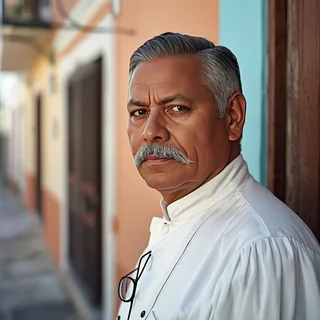
Marcos Valdez published the follow-up today to his finding that Puerto Rico has the highest vacancy share in the United States [1][2]: a breakdown of the Census category that swallows most of the island's empty homes. Puerto Rico counts 375,748 vacant units [3], and 240,344 of them - about two of every three - sit in the Census Bureau's catch-all 'other vacant' bucket [4][5].
That bucket is where Puerto Rico stops looking like anywhere else. Its 'other vacant' share of 64.0 percent is the highest of all 52 jurisdictions in the 2025 American Community Survey [6]. Only seven states even cross 50 percent: Mississippi at 61.9 percent [7], Kansas at 55.5 [8], Kentucky at 54.1 [9], Oklahoma at 53.6 [10], Illinois at 53.4 [11], Louisiana at 52.4 [12] and Alabama at 51.3 [13]. Nationally, the 'other vacant' share is 34.6 percent [14].
Inside the category, the Census subcategory tables tell the real story. The largest reason a Puerto Rico home stands empty is not decay and not the market: personal and family reasons account for 25.3 percent of all vacant units [15] - 95,166 homes [16] - and the prolonged absence of the owner for another 10.9 percent [17].
What the numbers are not is an abandonment story. Abandoned or possibly condemned units number 22,077 [18]; units tied up in legal proceedings, 6,323 [19]; foreclosure, 1,861 [20]. All three combined - 30,261 homes [21] - come to 8.1 percent of the island's vacancies [22].
Nor is it churn. More than two of every five vacant homes in Puerto Rico - 42.8 percent - have been empty for two years or longer [23], against 21.9 percent nationally [24]; the one-year national mark is 29.8 percent [25]. These are units that left the housing market and stayed out of it.
Valdez's own framing is careful: he poses explanations as open questions, not findings [26]. Do Puerto Ricans who move to the mainland keep their island homes unsold? [27] Do elderly owners entering care facilities leave houses standing empty? [28] Does avoiding the probate process keep roughly a quarter of vacant units off the market? [29] His closing question - whether Puerto Rico should act, and how [30] - is the one the numbers now force. Whatever the answer, a housing conversation built on 240,344 held units starts from a different premise than one built on 30,261 abandoned ones.Marcos Valdez publicó hoy la continuación del trabajo en el que determinó que Puerto Rico tiene la mayor proporción de viviendas vacantes de todos los Estados Unidos [1][2]: un desglose de la categoría censal que agrupa la mayor parte de los hogares desocupados de la isla. Puerto Rico registra 375.748 unidades vacantes [3], de las cuales 240.344, aproximadamente dos de cada tres, se encuentran dentro de la categoría general «otros vacantes» de la Oficina del Censo [4][5].
Esta categoría es la que marca la diferencia entre Puerto Rico y el resto del país. Su proporción de 64,0 por ciento en «otros vacantes» es la más alta de las 52 jurisdicciones registradas en la Encuesta Comunitaria Estadounidense de 2025 [6]. Solo siete estados superan el 50 por ciento: Misisipi con 61,9 por ciento [7], Kansas con 55,5 [8], Kentucky con 54,1 [9], Oklahoma con 53,6 [10], Illinois con 53,4 [11], Luisiana con 52,4 [12] y Alabama con 51,3 [13]. A nivel nacional, la proporción de «otros vacantes» es de 34,6 por ciento [14].
Dentro de esta categoría, las tablas de subcategorías del Censo revelan la situación real. El motivo principal por el que una vivienda permanece desocupada en Puerto Rico no es el deterioro ni las condiciones del mercado: los motivos personales y familiares explican el 25,3 por ciento de todas las unidades vacantes [15], es decir, 95.166 hogares [16], , mientras que la ausencia prolongada de la persona propietaria representa otro 10,9 por ciento [17].
Estas cifras no corresponden a un escenario de abandono. Las unidades abandonadas o potencialmente condenadas suman 22.077 [18]; las viviendas sujetas a procesos legales, 6.323 [19]; las ejecutorias hipotecarias, 1.861 [20]. La suma de estos tres grupos, 30.261 hogares [21], representa el 8,1 por ciento de todas las viviendas vacantes de la isla [22].
Tampoco se trata de rotación temporal. Más de dos de cada cinco viviendas vacantes en Puerto Rico, el 42,8 por ciento, permanecen desocupadas desde hace dos años o más [23], frente al 21,9 por ciento registrado a nivel nacional [24]; la cifra nacional para periodos de un año es del 29,8 por ciento [25]. Se trata de unidades que salieron del mercado habitacional y no han regresado.
Valdez expone su análisis con cautela: plantea las posibles explicaciones como preguntas abiertas, no como conclusiones demostradas [26]. ¿Mantienen sin vender su casa en la isla las personas puertorriqueñas que se mudan al continente? [27] ¿Dejan sus hogares desocupados las personas mayores que ingresan a centros de cuidado? [28] ¿La evasión del proceso de sucesión mantiene fuera del mercado aproximadamente una cuarta parte de las viviendas vacantes? [29] La pregunta con la que cierra el trabajo, si Puerto Rico debe tomar medidas al respecto, y de qué tipo [30], es la que estas cifras ponen sobre la mesa. Cualquiera que sea la respuesta, un debate sobre vivienda que parte de 240.344 hogares retenidos se basa en premisas muy distintas a uno que parte de 30.261 viviendas abandonadas.
References30 sources · 1 publisher
What this stands on
Marcos Valdez published an analysis at marcosvaldez.com on November 17, 2026. · document
Puerto Rico has the highest vacant housing share among the 50 states, DC and Puerto Rico. · document
Puerto Rico had 375748 vacant housing units per U.S. Census Bureau 2025 1-year American Community Survey. · document
240344 of Puerto Rico's vacant housing units were classified 'other vacant'. · document
64 percent of vacant Puerto Rico homes are in the Census 'other vacant' category. · document
Puerto Rico has the highest 'other vacant' share among the 52 jurisdictions. · document
Mississippi has 61.9 percent 'other vacant' share of vacant units. · document
Kansas has 55.5 percent 'other vacant' share of vacant units. · document
Kentucky has 54.1 percent 'other vacant' share of vacant units. · document
Oklahoma has 53.6 percent 'other vacant' share of vacant units. · document
Illinois has 53.4 percent 'other vacant' share of vacant units. · document
Louisiana has 52.4 percent 'other vacant' share of vacant units. · document
Alabama has 51.3 percent 'other vacant' share of vacant units. · document
The US 'other vacant' share is 34.6%. · document
Personal or family reasons account for 25.3% of Puerto Rico vacant units. · document
ACS 2025 1-year table B25130 for Puerto Rico states 95166 vacant units were vacant for personal or family reasons, 40814 for owner extended absence, totalling 135980 units or 36.2% of all 375748 vacancies. · document
Extended owner absence accounts for 10.9% of Puerto Rico vacant units. · document
22077 Puerto Rico housing units are vacant due to abandonment or possible condemnation. · document
6323 Puerto Rico housing units are vacant due to legal proceedings. · document
1861 Puerto Rico housing units are vacant due to foreclosure. · document
Combined listed vacant units equal 8.1 percent of relevant units. · document
Combined listed vacant units total 30261 in Puerto Rico. · document
42.8 percent of Puerto Rico's vacant units were empty 24 months or more. · document
National 24+ month vacant unit rate is 21.9 percent. · document
National 12+ month vacant unit rate is 29.8 percent. · document
This analysis poses explanations as open questions instead of findings. · document
The analysis asks if Puerto Ricans moving to the mainland keep island homes unsold. · document
The analysis asks if elderly owners entering care leave houses empty. · document
The analysis asks if avoiding probate keeps roughly a quarter of vacant units off the market. · document
The analysis closes by asking if Puerto Rico should act, and how. · document
We do not know which country they publish from. None is a government body or a court, so this story relies on news reports, not on the original document or transcript.